
A large-scale intervention deployed by several State institutions in the north-central of Quito revealed, in a single day, different fronts of illicit activity that ranged from the circulation of firearms and substances subject to control to the marketing of allegedly contraband liquor and the presence of vehicles reported as stolen. The operation concluded with 50 people arrested and the closure of four establishments in the The Marshalone of the busiest shopping and entertainment areas in the Ecuadorian capital.
The operation was carried out during the night of Thursday, July 16, and its results were presented this Friday by the authorities. Members of the National Police, officials of the Metropolitan Control Agency (AMC)of the National Customs Service of Ecuador (SENAE) and other municipal agencies, which carried out simultaneous inspections on streets, commercial premises and vehicles.
The official balance indicates that 30 of the detained people did not have documentation proving their regular stay in the country. These citizens were placed at the disposal of the competent authorities to verify their immigration status and determine the corresponding administrative actions.

The other 20 people were arrested for alleged crimes related to the possession of substances subject to control and with the possible connection to vehicles that had reports of theft. The cases were left in the hands of the Prosecutor’s Office and the Police investigative units for the development of judicial proceedings.
During the interventions, the uniformed officers seized four rifles and several edged weapons, evidence that will be subjected to expertise to establish their origin, determine if they were involved in other criminal acts and identify their owners or those responsible for their possession. It is also They seized different quantities of drugsalthough the authorities did not specify the weight or type of substances found.
One of the results highlighted by the Police was the recovery of six vehicles and six motorcycles that were recorded as stolen in institutional records. In addition, another 14 motorcycles were detained while the authenticity of their documentation and the information corresponding to their engine and chassis numbers were verified.
The recovered vehicles will remain in custody while the technical and judicial examinations are completed prior to their return to the owners. The investigations also seek to establish whether these vehicles were used to facilitate the activities of criminal organizations or to commit other crimes within the Metropolitan District of Quito.
The intervention included controls on goods of foreign origin. Personnel from the National Customs Service detected alcoholic beverages that allegedly entered the country without complying with legal import procedures. Among the seized products were Colombian beers and bottles of whiskey that did not present tax stamps or official labels required for marketing in Ecuador.
The customs authorities indicated that this type of controls seeks to stop the informal trade of alcoholic beverages, an activity that not only represents losses for tax collection, but also makes it difficult to trace the products that reach the consumer.
At the same time, the Metropolitan Control Agency inspected establishments in the area and ordered the closure of four establishments for non-compliance with municipal regulations. Among the irregularities identified were the absence of permits to operate tourist activities, deficiencies in health conditions and recurrence of previously sanctioned administrative infractions.
Municipal officials also indicated that some establishments have removed closure seals placed in previous operations to continue operating, a conduct that can generate new sanctions and administrative processes.
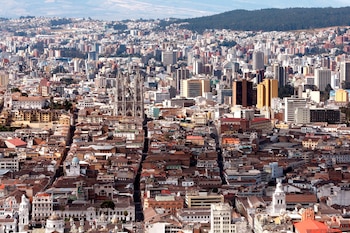
The Marshal It concentrates an important tourist, gastronomic and night entertainment activity, which is why it is periodically the subject of inter-institutional operations aimed at controlling the operation of commercial establishments and reducing crimes such as micro-trafficking, the receipt of stolen goods, the illegal carrying of weapons and other illicit economies.
Source: Infobae

