
Tokyo, Rome and other study destinations rearranged the map of the Argentine language tourism: the demand towards the Japanese capital tripled since 2019 and the Italian city quadrupledin a turn that combines global cultural consumption among young people and the search for training with cognitive well-being among those over fifty years of age.
The change was not limited to those two poles. Malta tripled its pre-pandemic recordsMunich also multiplied its numbers by three and Nice showed an increase close to double, in a scenario in which Europe gained weight among those who prioritize price-quality ratio, standard of living and international experience.
The data that explains the turn
According to data from the most marked growth in Asia is concentrated in Japan. According to the more than 33,800 Argentines They traveled to the country in 2025, in line with 42.7 million visitors foreigners received by Japan during the past year.
Japan moved forward driven by youthful interest in Asian pop culture; Rome, for an audience over fifty years old who seeks to study and, at the same time, add a cultural experience in the Old Continent.
Rome grows among those over 50 years of age due to study, culture and cognitive health
In Europe, the most striking phenomenon is concentrated in the silver generation. Rome quadrupled its demand compared to pre-pandemic levels, as a reflection of an audience that combines training, cultural life and international experience.

Learning a new language in older adulthood stimulates neuroplasticity and strengthens cognitive reservebecause it forces the brain to create new neural connections and reorganize existing ones in the face of unknown grammatical structures and vocabulary.
This sustained intellectual effort improves executive functions such as working memory, focused attention, and the ability to solve complex problems. It can also slow down the cognitive decline associated with aging and delay the clinical manifestation of dementia and Alzheimer’s for several years.
Raffaella Rumiatiprofessor of neuropsychology at the Tor Vergata University of Romeparticipated in a panel discussion with students and stated: “Intellectual exercise, such as learning languages or music, activates the cognitive reserve, which protects against premature brain aging.”
The specialist also pointed out that lifelong learning can strengthen memory and delay cognitive decline. He recognized that studying a language becomes more challenging with age, because functions such as memory and perception age, although he stressed that older adults compensate for this difficulty with strategies and methods incorporated over the years.
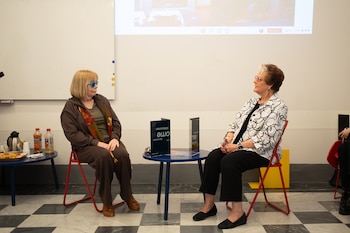
Rumiati compared this advantage to driving: young people may be faster, but experience provides practical knowledge to make decisions. On this basis, learning a language appears not only as a cultural tool, but also as a way to preserve autonomy and mental health.
In that same European corridor, Malta established itself as another focus of language tourism due to its status as an English-speaking country, its warm climate, its historical heritage and its moderate costs. Munich and Nice complete a more diverse map than five years ago for Argentines looking to study abroad.
Japan’s rise is supported by cultural consumption
Behind the Tokyo leap there appears a clear generational component. Luciano Combadirector of Education First (EF) in Argentina, explained that “the number of Argentines who choose Tokyo as an educational destination tripled compared to pre-pandemic levels, reflecting a total shift towards language tourism guided by passions.”
The manager added that “this phenomenon responds to a change in the expectations of travelers, who pursue experiences in environments that offer an absolute contrast in their language, aesthetics and norms of coexistence.”
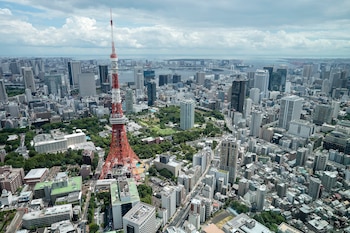
According to Comba, the craze for traveling to Japan is a global trend that arrived in Argentina somewhat late. He cited the case of Mexico, where group outings have been successful since before the pandemic.
Comba explained that the demand for Tokyo as an educational destination tripled compared to pre-pandemic levels and that this growth is already impacting the availability of places in the city’s classrooms. For this reason, this summer the company decided to add Kyoto as an alternative to study in Japan.
What is it like to study in Tokyo?
For international students, the firm’s school in Tokyo became one of the most sought-after campuses. The city has more than 13 million inhabitants and reaches 30 million in its metropolitan area, with a combination of safe and punctual public transportation, skyscrapers, restaurants, residential neighborhoods and parks with ancient temples.
The headquarters is located in Shibuya Cross Towerin the center of the city. The space offers modern amenities and a spacious common room for socializing, while its activity program includes basketball games in Yoyogi Park with local residents and gatherings such as the International Cafe, where students interact with Japanese students.
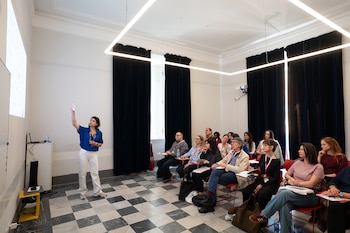
The proposal also adds visits to the Meiji Shrine, shopping afternoons in Harajuku, karaoke and izakaya nights, tours of ramen museums and seasonal activities such as hanami in spring or watching fireworks in summer. Students also take advantage of bullet train trips to Kyoto, trips to Hiroshima, visits to Nikko, and excursions to FujiQ Highlandsat the foot of Mount Fuji.
Source: Infobae

